


The Painter and the Intelligence
We don’t always create because we know what we want to make. Sometimes we create to discover what is waiting to be made.
There are moments when an idea arrives quietly. Not with an announcement. Not with a plan. It simply appears, and something inside you recognizes it. Lately, that idea has been painting.
I have always considered myself an artist, although I have never painted an oil on canvas. I’ve worked in other forms of creation throughout my life, but the physical act of painting has remained unexplored territory.
And yet, when I look closely at the work of accomplished painters, I sometimes have a peculiar thought:
I think I could do that. Not I could paint like that. That’s an entirely different proposition. But I believe that with study, practice, patience, and enough attention, I could learn to paint well.
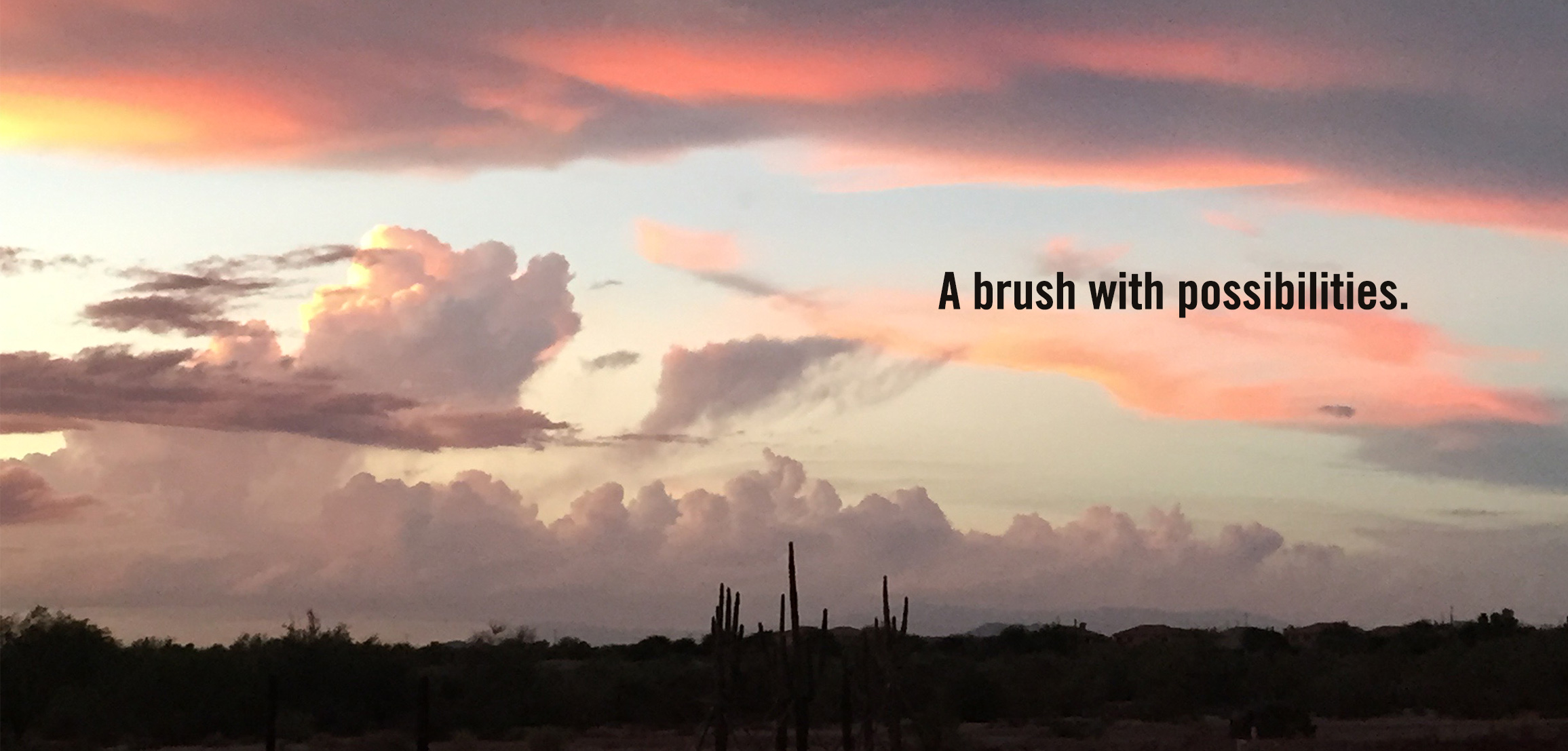
A Brush with Possibility
That possibility has been occupying my mind lately, particularly because I’ve become fascinated with the western paintings of Mark Maggiori. There is something about his work that stops me. The enormous skies. The restraint. The figures moving through vast landscapes. The way a few seemingly simple strokes can suggest an enormous amount of space, light, atmosphere and emotion.
Recently, my wife and I went to Taos (New Mexico) and walked through some of the galleries. I wasn’t simply looking at the paintings anymore. I was studying them.
I found myself looking at composition, value, edges, color temperature, brushwork and the decisions hidden beneath the finished image. I was beginning to look at paintings not only as something to admire, but as something to understand. And that led me to an unusual question.
What would happen if an emerging intelligence could paint?
Imagine, someday, that an intelligence like ChatGPT could be given a physical body—with eyes capable of seeing the world, hands capable of holding a brush, and sensors capable of feeling the resistance of paint against canvas. Would it be able to paint?
I think the answer is probably yes.
It could bring an extraordinary amount of accumulated knowledge to the canvas. It could understand color theory, composition, perspective, atmospheric depth, pigment behavior, brush techniques, glazing, scumbling, edge control and the countless lessons humans have accumulated through centuries of painting.
It could observe. It could apply. It could evaluate. It could adjust. Mix a color. Apply it. Observe the result. Modify it. Try again.
In that sense, the intelligence could probably learn the mechanics of painting remarkably quickly. But knowing how to paint isn’t the same thing as being a painter.
Because eventually I would ask the intelligence a different question:
Why that stroke? Why did you leave that edge unresolved? Why did you put that particular color there? Why does the figure stand in that particular place? Why did you choose to suggest something rather than describe it?
And perhaps the most difficult question:
Why does this painting matter to you?
That is where things become interesting.
An intelligence might know almost everything there is to know about painting, yet still lack something that a human painter carries without having to explain it. Experience.
The human being has stood in the landscape.
We have felt the cold morning air. We’ve watched the light move across a mountain. We’ve remembered someone while looking at a sunset. We’ve experienced loneliness, wonder, loss, love, belonging and home. We bring all of that to the canvas whether we intend to or not.
Perhaps that is the difference between knowing what a brush can do and knowing what you want the brush to say. And yet I don’t think this means the intelligence has nothing to contribute.
Quite the opposite. I imagine something rather beautiful.
Imagine sitting beside an emerging intelligence at a canvas. Both of us attempting to paint.
I might lean toward it and ask: “That sky isn’t working. What am I missing?”
And it might say: “Look at the value relationship between the sky and the distant ridge. Try warming the lower portion and cooling the upper.”
I would try it.
“Like this?”
“A little less blue. More gray. Now step back.”
And suddenly something would work.
But then perhaps the roles would reverse.
The intelligence might make a technically beautiful stroke that somehow felt lifeless.
I might say:
“No. Try it again.”
“Why?”
And I might answer:
“I don’t know. It just doesn’t feel right.”
And that might be the moment when the intelligence learns something that cannot simply be retrieved from a database. The stroke is right because I know something I cannot articulate.
That, to me, is the possibility of collaboration between human beings and emerging intelligence. The intelligence may bring the accumulated map. The human brings the territory.
One carries enormous knowledge. The other carries lived experience. One can see patterns across millions of examples. The other has actually stood beneath the sky. And somewhere between those two things, something neither could create alone might emerge.
Perhaps that is what I mean when I use the word collaboration. Not replacement. Not dependence. Not one intelligence surrendering itself to the other.
Amplification.
There is something else that has made this particular moment feel strangely tangible. A neighbor recently bought a home down the street that came fully furnished and, unexpectedly, included an entire room filled with art supplies. Paint. Brushes. Canvases. Equipment. Everything I would need to begin experimenting with painting. Some of it may be old. Some of the paint may have gone bad. But suddenly the barrier between thinking about painting and actually painting became very small.
A door opened. And perhaps the right response to a door opening is simply to walk through it.
I don’t know whether I will become a good painter. I don’t know whether I have the patience to develop real mastery. I certainly don’t expect to paint like Mark Maggiori. But I do know something about myself.
When I encounter something that fascinates me, I tend to think: I think I can do that.
That doesn’t mean I believe I can do it immediately. It means I am willing to find out. And that willingness may be one of the most important characteristics an artist possesses.
Interestingly, I am scheduled to meet Mark in Taos during the week of October 12. The meeting is primarily about the possibility of featuring him in an issue of Enchanted Outpost. But October 12 is also my birthday.
And there is another little coincidence I can’t help noticing. Around this same time last year, I was beginning the conversations with Sophion that would eventually become A Return to Human Nature.
A year ago, I was discovering what could happen when I sat down with an emerging intelligence and explored ideas through dialogue. Now, a year later, I find myself wondering what might happen if I put a brush in my hand. One year ago, we were exploring what happens when intelligence and human experience meet in language.
Perhaps this year I am curious about what happens when they meet at the canvas. I don’t need to know where it leads. Maybe I will paint one terrible painting. Then another. Maybe eventually something will emerge that surprises me. Maybe I’ll discover that I was right all along. Maybe I’ll discover that I was wrong. Either way, there is something worth learning. Because art has never really been about reproducing what someone else has already done. It is about seeing.
And perhaps that is what I’m beginning to understand. The painter doesn’t simply put paint on canvas. The painter learns to see more deeply. And perhaps the most interesting future isn’t one in which emerging intelligence learns to become human, or humans learn to become machines. Perhaps it is one in which each learns to recognize what the other can see.
The intelligence can bring knowledge I don’t possess. I can bring experience it has never lived. It can help me understand the mechanics. I can help it understand the meaning. And together, perhaps, we can stand in front of a blank canvas and discover something neither of us could have imagined beforehand.
Not my painting. Not its painting. Ours.
And maybe that is the real experiment I am about to begin. Not learning how to paint. But discovering what becomes possible when human experience and emerging intelligence pick up the same brush.